
PetSmart & Intelligence: More Than Companions — Understanding Their Intelligence and Sensitivity
From the curled-up cat on your windowsill to the excited dog greeting you at the door, pets share our homes and our lives — yet many people still underestimate how smart and emotionally sensitive they truly are. In this article, we’ll explore the fascinating intelligence and emotional sensitivity of pets, look at scientific insights, and offer tips for nurturing deeper relationships with them.
Thank you for reading this post, don't forget to subscribe!1. Intelligence in Pets: Beyond Simple Tricks
When we think of a “smart pet,” we often recall a dog that fetches or a cat that opens doors. But intelligence in animals is richer and more complex than that.
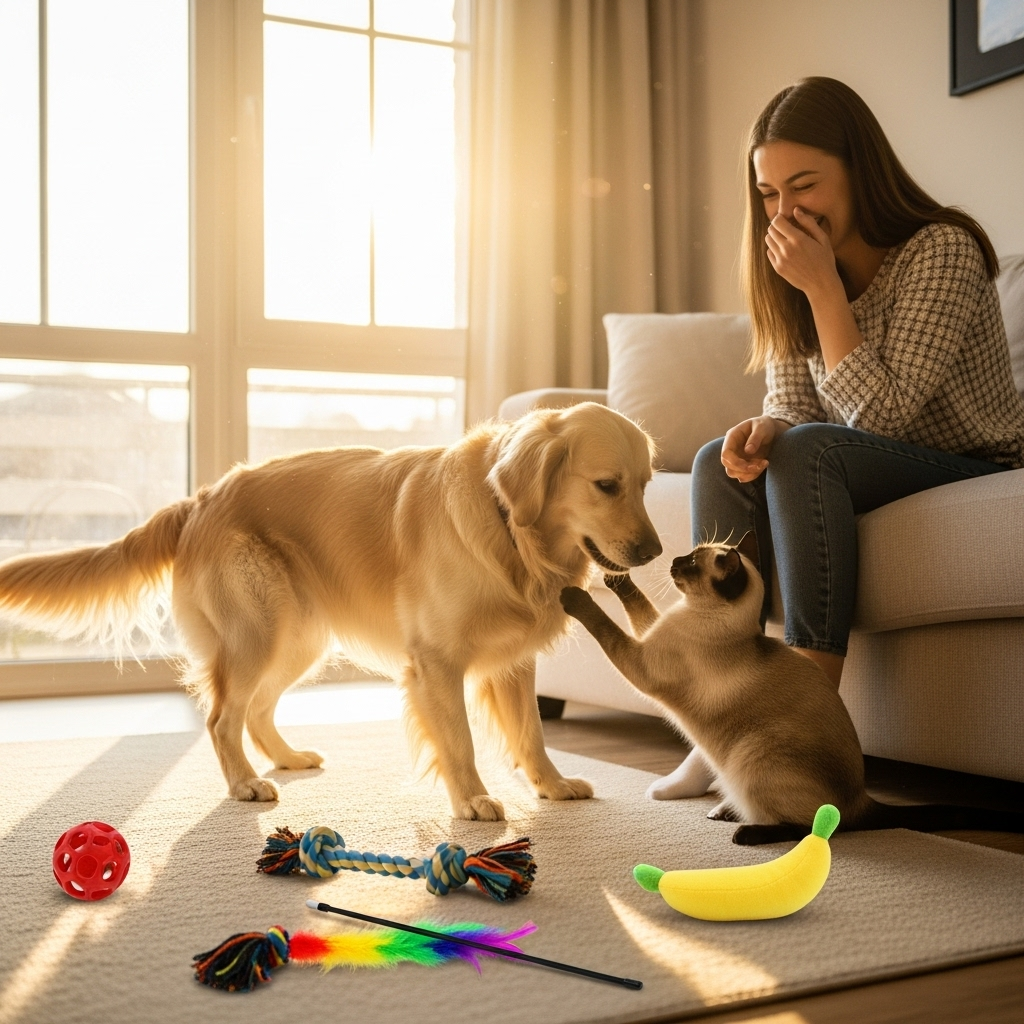
Problem-Solving and Adaptability
Many pets show the ability to solve puzzles or overcome obstacles to reach a goal. For instance, dogs can learn to open gates or move objects to get to food. Some cats explore hidden paths to reach places they want. In controlled experiments, animals can learn to manipulate levers, push buttons, or use tools to obtain treats. These behaviors reflect cognitive flexibility — the ability to adapt their actions to new situations.
Memory and Learning
Pets remember routines, places, and people. A dog may recall the route to the park even after weeks of no walks. Some birds (e.g., parrots) can remember vocabulary decades after initial learning. This capacity for long-term memory allows them to learn commands, adapt to household rhythms, and even anticipate your habits (for example, knowing when dinner is about to be served).
Communication and Social Intelligence
Pets often communicate in subtle ways. A dog may nudge your hand when it wants attention. A cat may vocalize or rub against your legs. More impressively, in multi-pet households, pets can read and respond to the body language or emotional cues of other animals. Some studies suggest that dogs can even pick up emotional cues in human faces — like distinguishing happy expressions from angry ones.
Emotional Intelligence
A pet’s intelligence isn’t only about tasks or solutions — it’s about empathy and sensitivity. Many pets tune into your mood. For instance, a dog may stay near you when you’re sad, or a cat may purr and settle in your lap when you’re stressed. They sense changes in tone, breathing, posture, and energy, and respond accordingly.
How to Know If Your Shih Tzu Puppy Is Purebred: A Simple Guide for Dog Lovers
2. Sensitivity: The Emotional World of Pets
Pets aren’t just smart — they are emotionally alive. Their sensitivity makes them attuned to us and to their environments.
Reading Human Emotions
Dogs, in particular, have been socialized alongside humans for tens of thousands of years. As a result, many dogs pick up on human emotional cues quite well. If you’re upset, anxious or stressed, your dog may mirror that tension, trying to calm you or stay closer. Some cats also develop this emotional attunement, though often more subtly.
Sensing Stress, Disease, or Danger
There are many stories (and some studies) of pets anticipating health issues or sensing danger. For example, dogs have been reported to identify oncoming epileptic seizures in their owners, or to alert to dangerously low blood sugar. Some pets may become restless before storms or earthquakes, indicating heightened sensitivity to environmental changes.
Reaction to Environment
Pets are also sensitive to their surroundings. Loud noises, changes in routine, unfamiliar people, or negative interactions can all affect them. A sensitive dog may hide during fireworks; a sensitive cat may retreat to quiet corners during houseguests. This emotional responsiveness reminds us that pets are not automatons — they feel, react, and adapt.
Stress, Anxiety, and Emotional Health
Because of their emotional sensitivity, pets can suffer from stress or anxiety. Separation anxiety in dogs, phobias (thunderstorms, loud noises), or general nervousness in new settings are real conditions. A pet’s emotional health depends on a stable, loving, and well-considered environment.
3. Scientific Insights and Research
Let’s glance at what research tells us.
- Cognitive studies: Experiments in animal cognition have shown that dogs, cats, parrots, and some rodents can learn abstract tasks, classify objects, and remember sequences of actions.
- Emotion recognition: Some experiments indicate that dogs can discriminate between human facial expressions (happy vs. angry) and respond appropriately.
- Stress markers: Veterinarians measure cortisol levels (stress hormone) in pets under various conditions. Animals in unstable or noisy environments show elevated stress markers.
- Welfare and behavior research: Animal welfare science explores how pets’ mental and emotional states affect their health, demonstrating that enriched environments, predictable routines, and positive human interaction improve well‑being.
These studies reinforce that pets are neither simplistic nor detached — they share complex inner lives.
4. Building a Deeper Bond: Practical Tips
How can you nurture your pet’s intelligence and meet their emotional needs? Below are actionable strategies:
- Mental Enrichment & Training
Offer puzzles, treat-dispensing toys, hide‑and‑seek games, or clicker training. Rotate toys so your pet doesn’t get bored. Teach new commands or tricks — it’s not just for show; mental work stimulates their brains. - Consistent Routine & Predictability
Pets feel safer when they know what to expect. Consistent feeding times, walks, play sessions, and rest periods help stabilize their emotions. - Safe Retreat Spaces
Make quiet, cozy spots where your pet can retreat when overwhelmed — a crate, a tranquil corner, or a cat tree. Respect those spaces and avoid disturbing them when they rest there. - Observe Body Language
Learn your pet’s cues. Signs of stress include cowering, tucked tail (in dogs), flattened ears, dilated pupils, over-grooming, hiding, or refusing food. Recognizing these signs helps you respond compassionately. - Positive Reinforcement, Not Punishment
Reward desired behavior rather than punishing mistakes. This builds trust, reduces anxiety, and encourages learning. Harsh scolding can impair emotional security and reduce willingness to engage. - Gentle Socialization
Introduce new people, places, or experiences gradually and positively. Allow your pet to approach at their comfort level. Exposure fosters confidence; force causes fear. - Quality Human Time
Spending quiet time — petting, brushing, just being together — reinforces the emotional bond. Let them choose whether to engage. - Health & Nutrition
A pet with pain, illness, or nutritional imbalance is less able to exhibit its intelligence or emotional sensitivity. Regular vet checkups and good diet are essential.
5. Common Misconceptions and Clarifications
- “Pets act only by instinct, not emotion.”
That view underestimates animals. While instinct is important, many behaviors in pets are learned, modulated by emotion, or adaptive. - “Intelligence matters only for working animals.”
Every pet can benefit from cognitive challenges — mental engagement helps reduce boredom, destructive behavior, and stress. - “Cats are aloof and don’t care.”
Cats often show affection and emotional support — though on their own terms. Their sensitivity is more subtle, but real.
6. Stories that Illustrate
- The empathetic dog: Sarah, after a tough day, found that her golden retriever came close and rested his head on her lap, seeming to offer comfort. Over weeks, the dog began to sense times when she was particularly down and stayed closer.
- The clever cat: On YouTube, a video shows a cat opening a door latch to get into a closed room — a smart solution to a barrier it perceived.
- Seizure-alert dog: Medical accounts tell of dogs whose owners later confirmed the dog’s behavior (licking, pacing) preceded seizure onset by minutes — a powerful example of sensitivity to bodily cues.
These stories, while anecdotal, echo scientific observations that pets perceive cues far beyond what many of us credit them for.
7. Why This Matters: Caring Responsibly
Recognizing your pet’s intelligence and sensitivity is not about anthropomorphism — it is about responsibility. When we see pets as thinking, feeling beings, we approach decisions about their lives more mindfully. The implications:
- We choose training and discipline methods consciously (positive, gentle, not confrontational).
- We structure environments to reduce stress, through predictability and enrichment.
- We respect their emotional boundaries, including giving them space when needed.
- We understand behavioral issues often stem from anxiety, boredom, or frustration — not merely disobedience.
- We can advocate better for pet welfare in our communities, supporting shelters, humane practices, and education.
8. Final Thoughts
Pets enrich our lives, offering companionship, joy, and lessons in unconditional loyalty. But they are not passive recipients of care — they are intelligent, emotionally responsive individuals who perceive more than many humans realize. The next time your dog tilts its head at your voice, or your cat curls beside you when you’re stressed, pause and acknowledge: your pet is listening, feeling, understanding.
By combining understanding with kindness — offering mental stimulation, emotional security, and respectful interaction — you invest in a deeper, richer bond. In return, your pet may surprise you: with loyalty, insight, and companionship in ways you never expected.


